
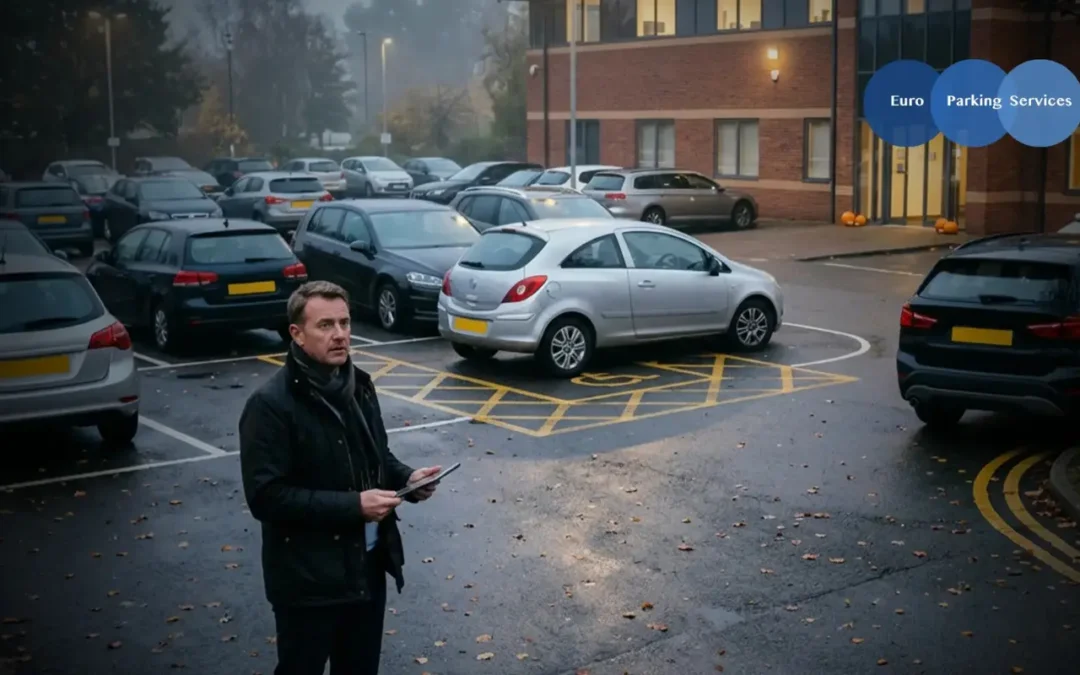

Halloween is built on surprises. In a car park, they are rarely welcome.
A visitor can’t find the parking instructions. A reserved bay is taken by the wrong vehicle. Site rules changed last month, but the parking system is still running the old ones. Each of these looks minor on its own. Left alone, they add up to wasted time for property managers and a poor first impression for everyone who drives onto the site.
Most parking management mistakes don’t come from the technology or the number of spaces. They come from the gaps between the rules, the systems and the daily routines that are supposed to hold them together.
Here are six of the most common car park management mistakes, and what property managers can do about each one.
1. Assuming Everyone Understands the Parking Rules
You know your site inside out. A first-time visitor doesn’t.
Maximum stays, payment requirements, restricted hours and designated bays can all become confusing when the information is hard to find or scattered across several signs. It gets worse at mixed-use developments, where residents, employees, customers, contractors and visitors each have different arrangements.
How to fix it
- Make the parking terms and conditions easy to find and easy to read.
- Place signs where drivers can see them before they park, not after.
- Check that payment instructions and restrictions say the same thing everywhere on site.
- Review signage whenever operating hours, tariffs or policies change.
When drivers know what is expected of them, you get fewer disputes and a more consistent basis for enforcing parking rules.
2. Letting Vehicle Permissions Go Out of Date
A bay might be reserved for a resident, an employee, a contractor or an approved visitor. But what happens when someone’s situation changes and the records stay the same?
An employee leaves. A contractor’s access period ends. A visitor’s vehicle registration is entered incorrectly. If nobody updates the permission, the system stops reflecting what is actually happening on site. That creates avoidable queries, and it makes genuine unauthorised parking harder to tell apart from an honest mix-up.
How to fix it
- Set up a clear process for adding, changing and removing vehicle permissions.
- Decide who owns the records and how quickly updates must be made.
- Where vehicle registration details are used to manage access, keep them accurate and handle them in line with data protection requirements.
A reliable process matters as much as the technology behind it.
3. Treating Every Parking Issue as a One-Off
One car in the wrong bay is an incident. The same car, or a different one, in the same bay every week is a pattern.
The cause might be poorly marked bays, visitor spaces in an awkward spot, or a layout that no longer matches how people use the property. Dealing with each incident separately clears the immediate problem but leaves the reason behind it untouched.
How to fix it
- Look for repeat locations, times and vehicle types, not just individual complaints.
- Pull together reports from site teams, tenant feedback and any parking records you hold.
- Ask what keeps causing the problem before asking how to respond faster.
The goal is prevention, not just a quicker reaction.
4. Changing Site Rules Without Updating the Parking System
Parking arrangements shift over time. A property adds visitor bays, extends its opening hours, sets aside spaces for contractors or changes how payment works.
Trouble starts when the signs, the written policy and the parking technology aren’t updated together. A new sign might show revised operating hours while the system still applies the old ones. The change itself may be simple, but the mismatch confuses drivers and sends extra work to your team.
How to fix it
- Treat every significant change as one coordinated update, not three separate jobs.
- Before new rules go live, confirm that signage, system settings, permissions and staff instructions all match.
- Name one person responsible for checking that each step is done.
A simple change-management routine stops small admin slips from becoming regular headaches.
5. Overlooking Access and Traffic Flow
A well-run car park does more than hold parked vehicles. Drivers also need to get in, move around and leave safely.
A delivery van blocking a turning area, a car left across an access route, or an entrance with unclear directions can disrupt the whole site. These problems are particularly disruptive at properties with shared access, regular deliveries, residential traffic or several types of visitor.
How to fix it
- Walk the whole vehicle journey, from the entrance to the exit, not just the bays.
- Make sure entrances, exits and access routes are clearly marked and stay usable.
- Confirm that emergency access and restricted areas are understood by everyone on site.
- Think about how deliveries, service vehicles and visitors overlap at busy times.
Good parking management supports how a property actually operates. It does more than control where vehicles end up.
6. Waiting for Complaints Before Acting
Property managers juggle competing priorities, so parking often gets attention only after a tenant raises a concern or a disruption becomes impossible to ignore.
By then, the problem has usually been affecting the site for some time. Acting early can help prevent issues from becoming more costly to resolve.
How to fix it
- Schedule regular reviews of parking arrangements, signage, permissions and reported issues.
- Where data is available, use it to spot patterns in occupancy, unauthorised parking and access problems.
- Check that the current set-up still suits the people using the property today.
Make Parking Problems Less Frightening
The parking problems that cause the most grief are rarely dramatic. They usually begin with something small: an outdated permission, an unclear sign, a process nobody has looked at in months.
The good news is that many of these issues can be addressed with clearer communication, named ownership and regular checks. You don’t have to wait for a parking issue to turn into a recurring problem before you deal with it. A little preparation and a close look at how your site operates can make a real difference.
This Halloween, leave the tricks and surprises to the trick-or-treaters. Your car park should be one less thing to worry about.
Need Support Managing Your Car Park?
Euro Parking Services provides parking management solutions for a range of sites, helping property owners and managers assess their requirements and choose suitable ways to manage them.